Category: nyc

  • COVID-19 & Content Creation

    how covid impacted content creation
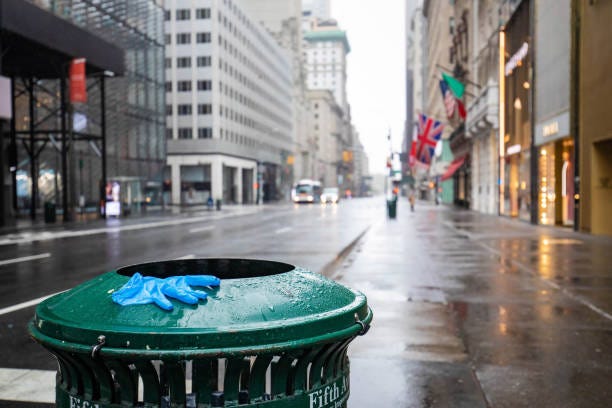

    GummyBone via iStock

    It would be an understatement to say that COVID-19 changed the world. Anyone and anything were impacted by the contagious virus, as entire economies–not just financial ones–and institutions were at the mercy of a global pandemic. Though I want to particularly touch on how lockdown impacted both the consumption and production of content creation. What I mean by this is that our relationship as both viewers and producers of content shifted as a result of being confined to our homes. Seemingly despite having more free and idle time during lockdown, short-form content like TikTok saw an upsurge in popularity. Moreover, as work from home became a new reality for those in the position and privilege to do so, content naturally became more confined to private and domesticity spaces.

    It is noteworthy that the shift between short form to long form content and vice versa has always existed on social media platforms prior to 2020. In fact, most popular platforms like Twitter (now Elon Musk’s’ X) and Instagram began with only having short form content before expanding to long form content. In the early days of Twitter, Jack Doherty’s Twitter, posts were no longer than 140 characters, resulting in language and ideas to be circumscribed. This nettlesome but unique feature set apart Twitter from other early social media platforms, forcing users to be creative and brief in their posts. The decision for 140 characters was not based on Doherty’s preference but due to the capacity the platform could handle at the time. It was not until November 2017 when Twitter increased the character limit to 280, an additional 140 characters. There were mixed feelings coming from users, some were happy that they no longer needed to confine themselves to 140 characters or less, whilst others felt that the character limit is what gave Twitter its identity and popularity.

    Instagram experienced a similar gradual shift from short form to long form content. In 2010 when Instagram launched, users were only allowed to post one photo per post. One single photo per post sounds unbelievable compared to where Instagram is now, but just like Twitter, the social media platform’s bandwidth was still in its preliminary stages. Eventually in 2013, 15-second videos were introduced onto the platform. Users were no longer bounded to still-images to create storytelling and sharing of ideas, as moving images made posts more engaging and fun. Though just like Twitter in 2017, Instagram inched towards long-form content by announcing their ‘carousel feature’, which allowed users to post up to 10 photos or videos in a single swipeable post.

    As content became more elaborate on social media, innately short form content progressed into long form content. Of course, depending on the type of content and genre, the choice for short form or long form content could sway either direction. Think of 2013 when Vine came out, most of the popular and recognizable Vines were comical and blithesome. It made sense that comedy was compatible as a short-form content, as users got creative on how to make 6 seconds worthwhile for a quick laugh. Despite Vine’s short-lived legacy, Vine should be considered as a case of ‘ahead of its time’, as now in 2026, short-form content seems to be what users have an appetite for with TikTok, Instagram reels, and YouTube shorts. Perhaps Vine gave social media users a sneak peek for how effective but still entertaining short-form content can be as it saw a reemergence in 2020.

    Notably, 2020 was a traumatic and eerie year in the United States. Statewide lockdowns were in place, COVID cases were rising every day, and the news became all too morbid to bare. For non-essential workers stuck at home, figuring out how to pass the time was a common experience. Still, with all the time in the world, people were consuming far more short-form content during the pandemic as TikTok was named the most downloaded app in 2020.

    But why?

    Well, there was an already overwhelming sense of traditional media fatigue and agitation that the pandemic unveiled and even exacerbated. Those who distrusted major television networks prior to the pandemic, found even more of a reason to not tune into news networks as misinformation regarding COVID circulated thanks to the unreliable Trump administration at the time. People intrinsically went onto social media to escape what was happening right outside their doors. Thus, short-form content acted as a substitute for our appetite in terms of media. TikToks were fast and effective in communicating and sharing of ideas, creating a sense of dopamine for an entire dormant audience.

    Shifting gears over to the production of content during lockdown, it is useful to view this relationship in parallel to how prevalent work from home became. As many jobs had to adopt to work from home (primarily office jobs), so did content creation. Content became more insular as socializing with others and going outside was interfered by lockdown. Naturally with home now being the main site of everyday interaction during quarantine, users on social media were more susceptible to being vulnerable and exposed. The presentation of the self as content heightened as the line between public and private spaces blurred as content entered domesticity. Echoes of this still function as a form of content-making in 2026 as the lack of boundaries between the private and public space was obstructed by COVID.


    Sources:

    Instagram. “Introducing Video on Instagram.”

    Anonymous. “TikTok named as the most downloaded app of 2020.” BBC.

    Amelia. “Twitter’s Evolution: From 140 Characters to Now.” Medium.

    Constine, Josh. “Instagram lets you post up to 10 photos or videos as 1 swipeable carousel.” TechCrunch.
  • Content Creator or Influencer?

    why we should start using the term content creator more in 2026


    Nubelson Fernandes via Unsplash

    “A content creator is different from an influencer–they are two separate things,” former YouTuber Catrific, also known as Cat Valdes in real life, expressed to me over the phone. I spoke with Cat back in April about her experience being an early YouTuber, creating content, and what happened after ‘retiring’ from YouTube. Being a former content creator herself, her distinction between the two terms was significant to me, as over the past year in my research I have observed these two terms often being used synonymously with one another through discourse on social media. This is problematic to me, let me explain why.

    Not everyone on social media that creates content and has a large following is an influencer. There needs to be clarity amongst these two terms in order to understand and allow dialogue regarding evolving online presences on social media. Thus, when one generalizes all online social media presences to just an influencer, dialogue is limited and rigid.

    To the naked eye content creators and influencers may seem identical, as content creators and influencers share similar practices, like monetization from content and the self, and primarily existing on social media platforms. However, I suggest that these two terms are entirely separate online entities. From my observation having both online and offline conversations regarding this very topic, the term influencer is being treated as a catch-all phrase, in an attempt to label and categorize a wide array of social media identities.

    One plausible cause for this might be the outdated language and prior discourse on online identities and self-presentation on social media. Books such as Brooke Erin Duffy’s (Not) Getting Paid to Do what You Love (2017) and Sarah Banet-Weiser’s Authentic ™: The Politics of Ambivalence in a Brand Culture (2012) provide a good baseline for understanding early online social media presences yet generalizes them. Moreover, the term content creator was not commonly used as it is now in 2026. Publications revolving online social media identities need to catch-up to language being used today on social media.

    So, what is an influencer?

    Influencers on social media today are public-facing online personas with a massive following, most commonly seen on Instagram. They partner up with companies and brands for sponsorships, often becoming an ambassador for a certain product that a company wants to sell. Influencers are used as another source for marketability and audience engagement and reach. In other words, influencers can be understood as individuals that both monetize and mobilize capitalistic ventures and avenues. Most popular influencers tend to be white cis women as well. Moreover, to be an influencer you need to be well-known, as one key component about a being influencer is being deemed recognizable enough to an audience by companies and sponsors to be marketable.

    On the other hand, to be a content creator you do not need to be recognizable or even have a large number of followers. Content creators are individuals who produce a wide variety of online engagement to an online audience, via any social media platform like YouTube, Instagram, Twitch, TikTok, etc. It could be creating original content like short films, live streaming, uploading commentary videos, ASMR, etc. Content creators also often monetize this engagement as a source of income, though not always. They are more evolved, refined, and flexible compared to influencers, who are tied down to one single format of which is to be a marketable persona. Additionally, content creators do not necessarily need fame and recognition to be successful, as becoming rich and famous is not the sole purpose for creating content online. Very rarely, if one is lucky enough, fame and recognition is a byproduct from their content. Early content creators can be thought of as YouTubers like Jenna Marbles, PewDiePie, and Ryan Higa. The term content creator is both used as a practice but also a noun, when people identify themselves as a content creator.

    The term content creator seems to be a recent phenomenon, however, content creators have always existed as I argue that YouTubers, like Catrific, were one of the first content creators in the age of social media. I like to visualize content creators existing within Richard Florida’s–American urban studies theorist and author–theory of the creative class. In his book The Rise of the Creative Class, Florida identities the creative class main characteristic and function as individuals who are innovators and trailblazers, creating meaningful new forms and expression.

    In a 2024 global survey from Florida’s Creative Class Group, he defines ‘creators’ as individuals with over 1,000 followers on their primary social media platform who create and share original content. My issue with Florida’s definition is that it’s too rigid and insufficient. For instance, 1,000 followers is a specific metric that does not necessarily translate to whether or not someone can be deemed a content creator or not, especially if someone tends to have a huge following without creating content online.

    Even as I write this, the phenomenon of content creators and content creation is evolving as social media changes, and new language emerges to describe new online entities. I shall end with this–content creators as a subject itself needs to be taken into consideration and taken seriously when it comes media studies, which is what I hope to achieve.


    Sources:

    Banet-Weiser, Sarah. Authentic ™: The Politics of Ambivalence in a Brand Culture. 2012

    Duffy, Brooke Erin. (Not) Getting Paid to Do what You Love: Gender, Social Media, and Aspirational Work. 2017

    Florida, Richard. The Rise of the Creative Class. 2012

    Florida, Richard. The Creator Revolution: Results from a Global Survey Creative Class Group.

  • A Tale of Two Cities on my YouTube Page

    Only being a year out since lockdown, I still felt as though I was not able to fully venture and explore my city, so watching NYC related content felt like a “check-in” to see how other parts of the city was handling and navigating the changing environment post-lockdown. Aside from watching James & Karla and ActionKid, I started to watch more YouTube channels from NYC content creators like Cash Jordan and HereBeBarr during 2021.

    I learned about Cash Jordan through YouTube’s algorithm as it saw that as I started to consume more NYC content, thus more NYC related channels started to appear on my homepage.

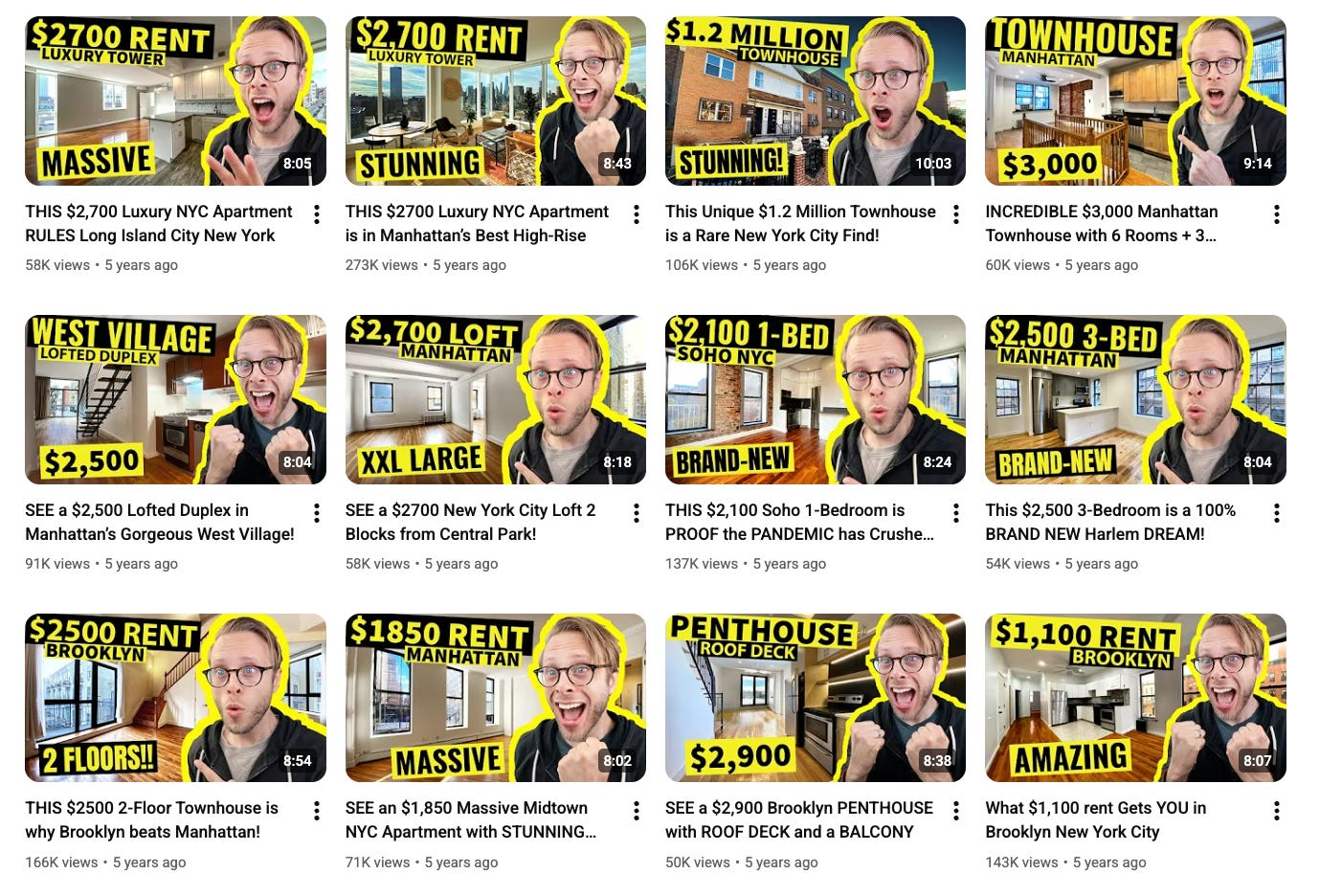
    Cash Jordan’s channel from 2020 – 2023 follows him as a real estate agent, showing off apartments in the city, some affordable and some luxurious condos and penthouses located in midtown or downtown Manhattan. Cash was not only uploading videos onto his YouTube channel as he also would upload these apartment tours on TikTok. In some early videos where he’s vlogging out on the street, strangers would often come up to him and say “Hey you’re the TikTok guy, right?”

    As previously mentioned in my first post, New York City’s real estate market was facing a crisis as many people fled the city during lockdown, since NYC became an early epicenter for the virus. Therefore with many apartments now emptied and vacant, and heavy COVID restrictions implemented, no one was in a rush to move back to the city. Cash Jordan mentioned this time and time again in his videos, as he would walk around the city and talk about the state of the real estate industry, especially since he too was feeling the brunt of this financial loss. Though he would continue to advertise these apartments and hope that when COVID restrictions would lift, people would be enticed to get in contact with him for these rental listings.

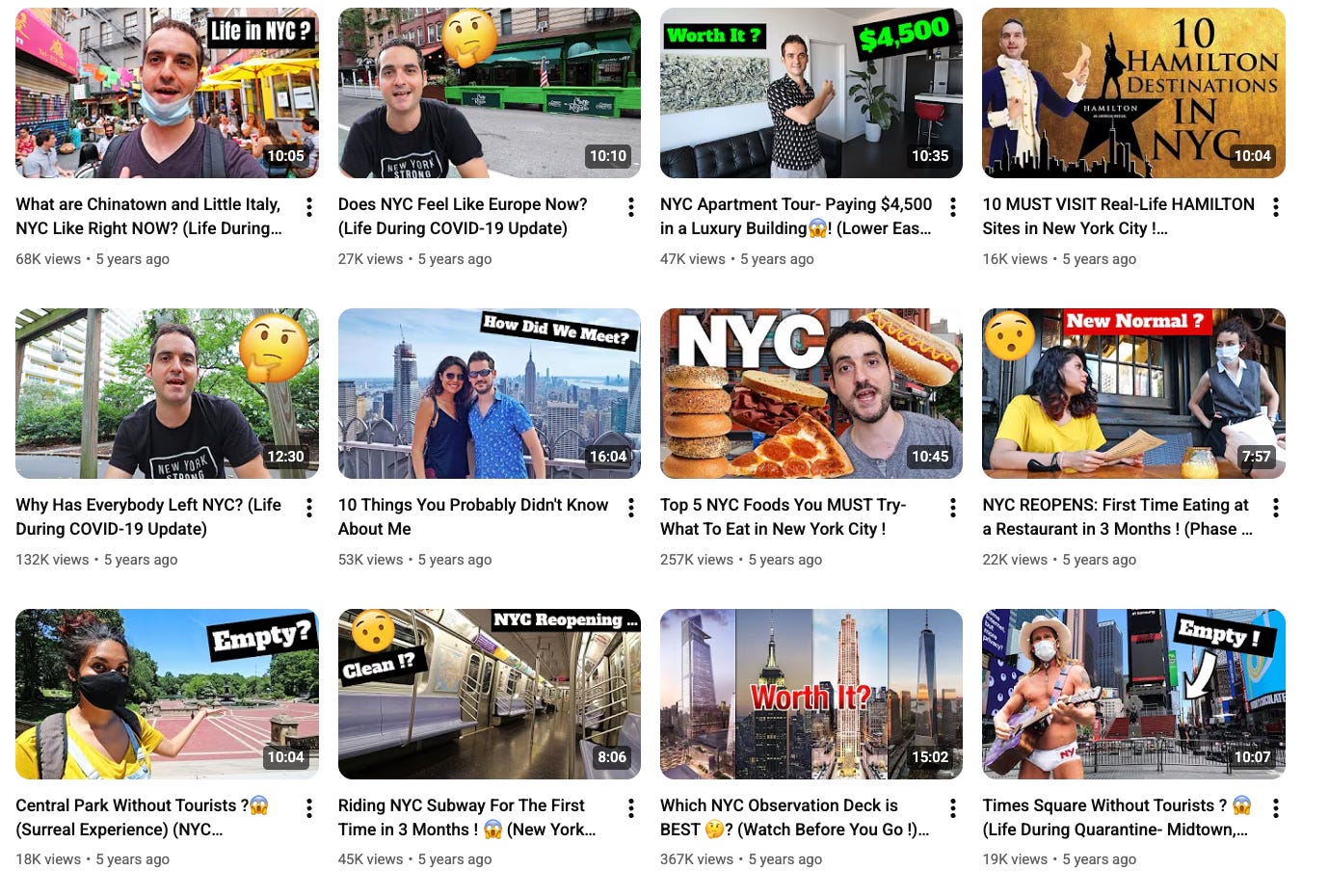
    The real estate industry was not the only business in NYC facing serve financial loss, as tourism was at a complete halt. In one video of Cash Jordans’ Here Be Barr was featured as they walked around the city and chatted about where the state of the city was in, and speculated the future of New York City. I remember this was a popular conversation even amongst my friends and I, as we wondered if our beloved city would return to normal, and if it would ever be the same as before.

    Here Be Barr’s channel was centered on tourism in NYC like the best local spots to go to, which unexplored areas tourists should visit in the city, and so forth. But when COVID-19 took a turn, his channel pivoted to updating his viewers on the state of NYC and whether it was worth coming to visit, or to hold off until more COVID restrictions were lifted from the city.

    I noticed amongst all these YouTube channels, James & Karla, Action Kid, Cash Jordan and Here Be Barr, all were documenting the changing business landscape of NYC. James & Karla with highlighting mom and pop shows along with Action Kid, Cash Jordan with the real estate industry, and Here Be Barr with the entertainment industry.

    All of these content creators stayed in the city during lockdown, as they showed the reality and gravity of the situation of NYC during one of its toughest times. I knew the gravity of the situation in my city was troublesome as I, like so many during this time, became glued to my local news. I would watch the news religiously as more new stories circulated about another business shutting down, a rise in COVID cases, or residents struggling with affording groceries since so many had lost their jobs due to COVID.

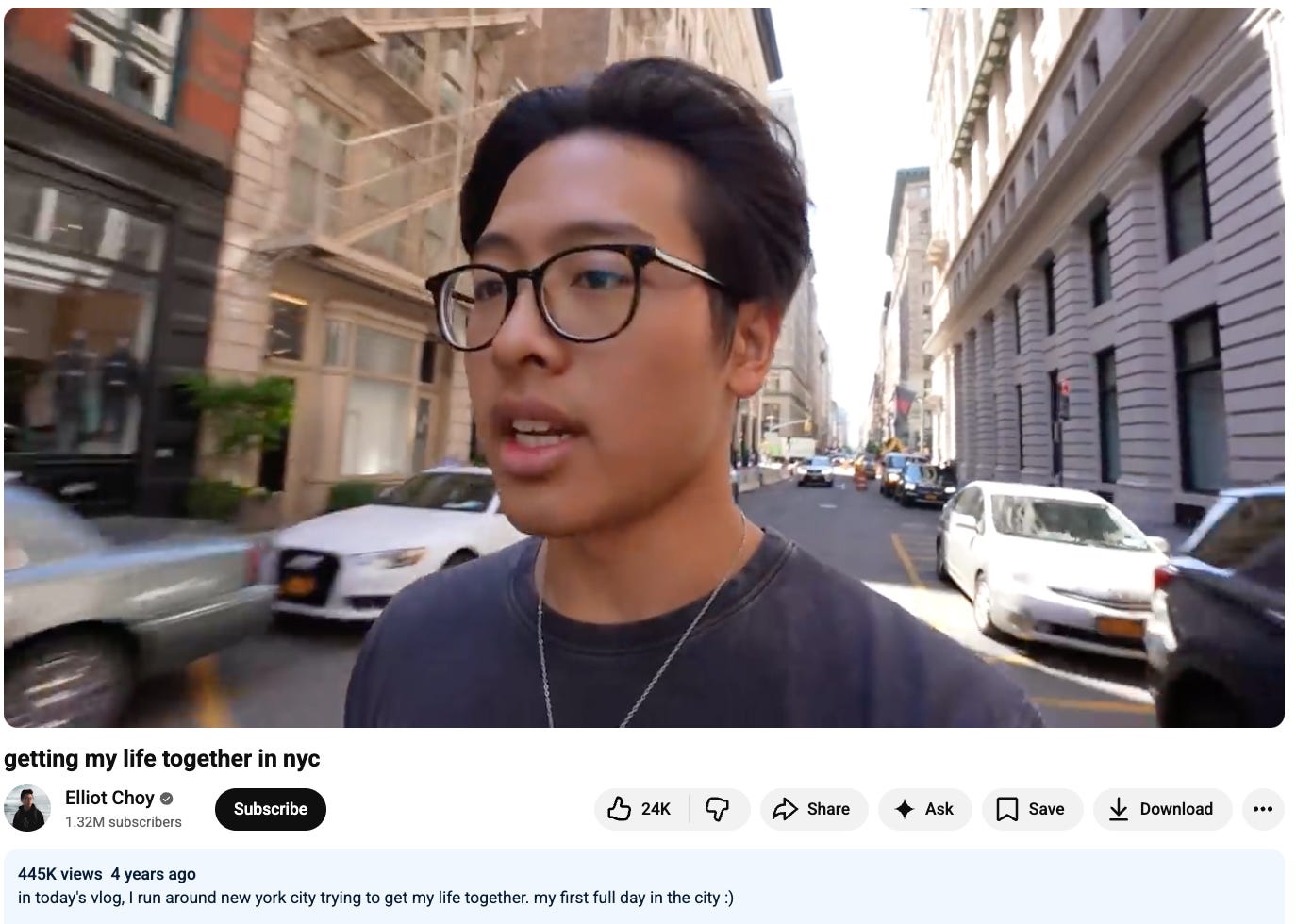
    All of it felt exhausting and overwhelming, until it didn’t, when I started to watch these new NYC content creators like Elliot Choy and his content creator house. When I wanted to escape the harsh reality of the state of NYC, I would watch Elliot Choy’s videos as he began his new era living in the Big Apple. I felt inspired by this newly graduate as he was full of ambition in a city where people were beginning to lose hope. In almost of his videos, he would speak on his journey as as young content creator and starting up his business and the routine of self-discipline and journaling. Following Choy throughout NYC felt different, it felt releasing. The upbeat music included in his videos definitely added to this effect.

    I remember being so inspired by one of Elliot Choy’s videos that I researched how much was a booster board so that I could travel throughout the city without having to take the subway. Much to my disappointment, booster boards were really expensive and this small itch of mine quickly died down after looking at the price online.

    My relationship felt weird to NYC during this time to say the least. I was overjoyed with inspiration and drive from Elliot Choy’s videos, yet on the other hand, I was concerned and worried with the reality of my city’s financial state as James & Karla and other local NYC content creators were documenting the challenges we were still facing as a city. I was expected to graduate in about a year and look for employment. The idea of looking for employment felt taxing and like a crude joke when the graduating class of 2020 was still struggling to find a job nearly 2 years into the pandemic.

    This conflicted feeling led to frustration. I felt lied to and disillusioned. I eventually saw two sides of my city on my YouTube homepage, the ‘real’ NYC versus the romanticized version of NYC. This vulnerability really shined through during the pandemic as those who had the money to ‘escape’ a global pandemic and not be too affected by the financial crisis going on felt like the best option. Whilst there were those who could no longer afford rent due to losing a job, etc.

    At the time, to me it felt like there were two types of content creators in NYC. Those who were taking advantage of the situation, low rents, financial flexibility and availability to still live normally in the city while creating content versus those who were more humble in their efforts in creating content in the city. This polarization and viewing of content creation in a city stumped me in my research.

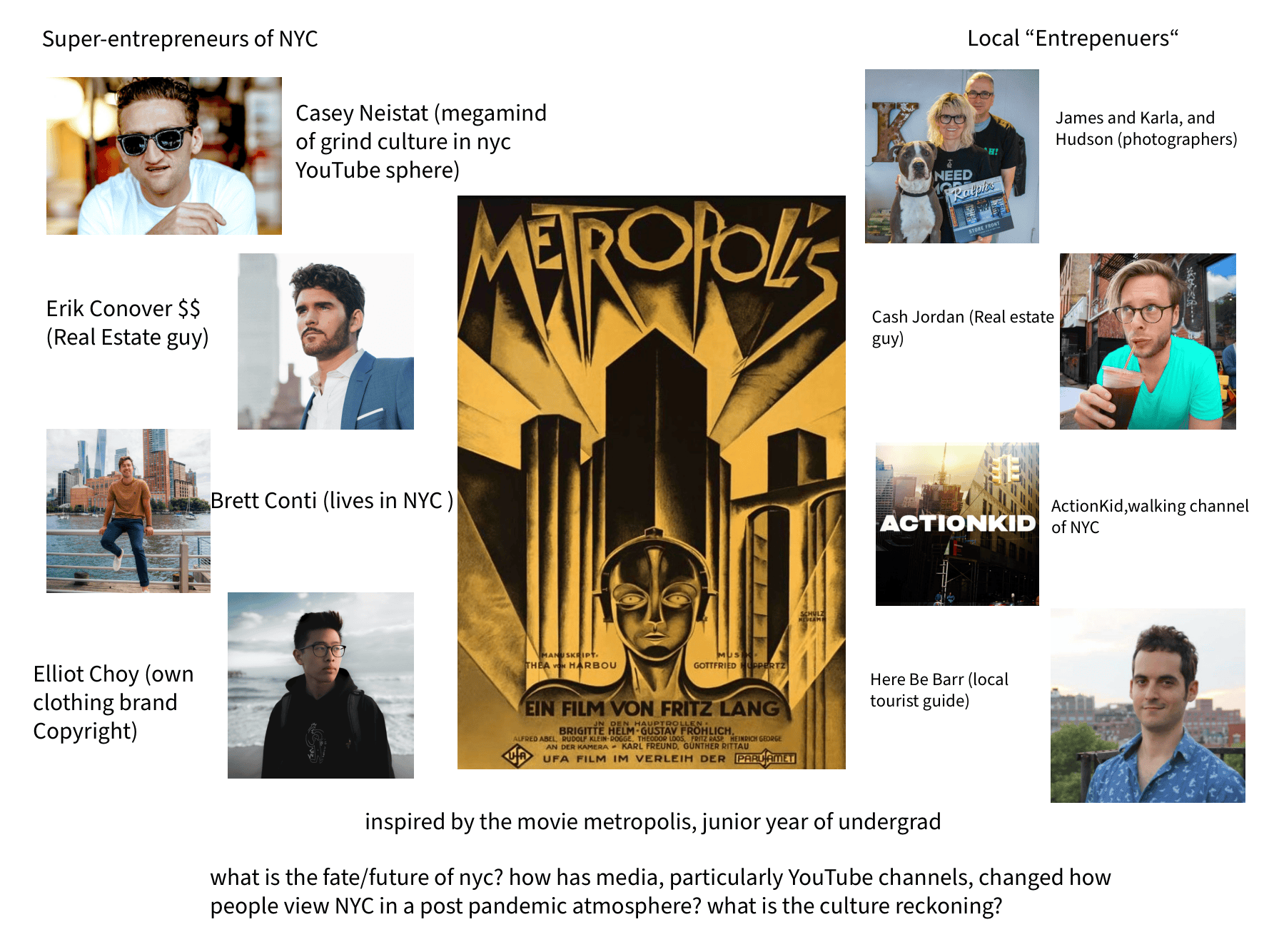
    By 2023, I tried to make sense of seeing these two sides of NYC by creating two categories: super entrepreneurs versus local entrepreneurs.

    I first presented this idea to my graduate core class, as premature and defensible this chart is, this early terminology was the first step in trying to figure out what I was really trying to get at with this classification between these two types of content creators in NYC.

    Even though I reference Charles Dickens here, there are so many more references that come to mind when thinking of New York City and the dichotomy of its two environments: the real NYC experience versus the romanticized experience of NYC.

    Here is what I defined the two as:

    real NYC = community & investment

    romanticized NYC = consuming & divestment

    Stopping here for just a second–to view any city in this binary, not just NYC, is fundamentally problematic as it does not allow room for conversation to viewing and experiencing a city another way. It closes up dialogue and is uninviting.

    I eventually came to this realization much later from where I first started with this research project, as it came so easy and instinctive for me to view NYC as blatantly classist being the child of a former maid/nanny (primarily in its power structure of work & labor). And despite identifying this flawed binary perspective, I still believe and view NYC as a classist city.

    Let me be clear: two things can be true whilst still being at odds with one another.

    NYC is a place for born and bred New Yorkers like myself, who live and work in the city, who grind and hustle, who experience the everyday nuances of living in a city like NYC. While on the other hand, NYC is also a place for outsiders to have fun, indulge in luxury, and consume endlessly til their hearts desire. This statement can be problematic for many, as it may come off as if I am complacent with my city being a playground for transplants and die-hard consumerists–I’m not.

    Simply put: when you have money, your experience of NYC is different as opposed to when you don’t have money. The way you consume NYC is different.

    Admitting this bitter truth about my city is a hard pill to swallow, but it’s the reality for most cities. Including classism as a concept to my research is necessary, or at least I view it so, to better understand a deeper understanding of how content creators have added to our cities as part of the creative class, and how this impacts or disrupts an already existing labor structure in a city.

    The photo being referenced in the chart above is from Fritz Lang’s 1927 film, Metropolis.

    I first watched this film in my junior year of college in my Robots & Film class. Despite the film being silent, it spoke volumes (pun intended) on every day modern problems that metropolitan cities like NYC see everyday. The poor working class, working everyday to the bone, while the upper wealthier class sits at their throne, watching over a city get constructed and operated by faceless workers. Metropolis hit home for me due to the structure of the city and its labor.

    I attached realities of the high and low class to the NYC content creators I was watching, and as much as I trying to attach certain characteristics to one or the either, neither made sense to me. So I ended up dropping this polarizing idea altogether.

    I view all NYC content creators as part of an ecosystem that is the creative class (Richard Florida). What I found more interesting from all these content creators was the migration of some like Elliot Choy moving to NYC during a time of financial crisis and cultural crisis as well. It was around 2023 that I began to see more NYC content creation on YouTube and Instagram, and even some conversations on Twitter.

    Was NYC becoming the spot to become a content creator in a post-COVID world?

    More ‘influencer’ centered stores were tailoring to content creators in the city and the work from home model that came out of COVID made it easier for people to just begin creating content, especially with the “day in my life” in NYC. I saw all of this as a new form of business that sprung out of COVID, or maybe COVID acted as a catalyst for this?

    But I knew that we had seen this migration before in content creation. We saw it first with YouTubers and LA.

  • LA had YouTubers, NYC has Content Creators

    New York City, 2021.

    The city was entering its first year out since lockdown, a post COVID-19 era so to speak. I was in my spring semester of sophomore year in college, where Zoom classes became all too familiar and the routine of waking up to sit at my make-shift ‘work from home’ set up to attend classes from a small bedroom in the Bronx was beginning to drain on me. It was sometime in May that a recommended video on my YouTube homepage piqued my interest. The video was from Elliot Choy.

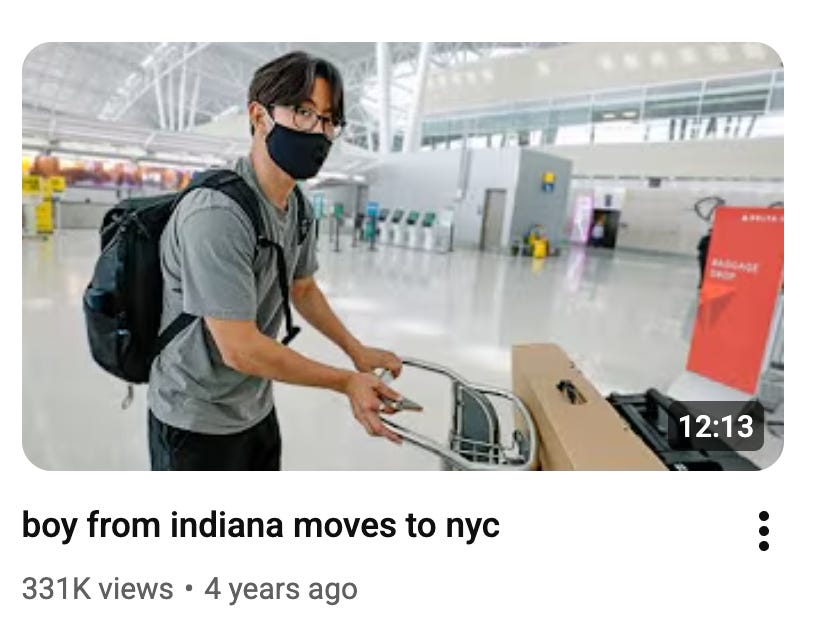
    I had heard about Elliot from other YouTubers that I semi-short of watched but never committed to subscribing to their channels during my last year of high school. I mainly knew him from his viral Harvard video where he was handing out iPhones to students for answering questions correctly. Why I was attracted to this video was not because of Elliot Choy’s prior fame, but because of the video title, boy from indiana moves to nyc. Having experience lockdown and quarantining in NYC since March 2020, and witnessing my beloved city go through one of our darkest times, all that came to mind were questions:

    why move to NYC when the city is still struggling from COVID-19?

    when outdoor dining is the only option…

    when quarantining is still mandated…

    when masks are obligated on public transit…

    when most of the city is still barely functioning…

    why?

    Not speaking on behalf of Elliot Choy, but these questions did not seem to matter to a freshly graduated college student from Vanderbilt University. Yet it was more than that. Rents were cheap. There were a lot of vacant units after people left the city in droves. Or shall I say, people who could afford to move away and/or quarantine elsewhere. Some apartment listings were offering up 2-3 free months of rent on StreetEasy, hoping this would entice some people to snag the deal–which some eventually did (I’ll come back to this).

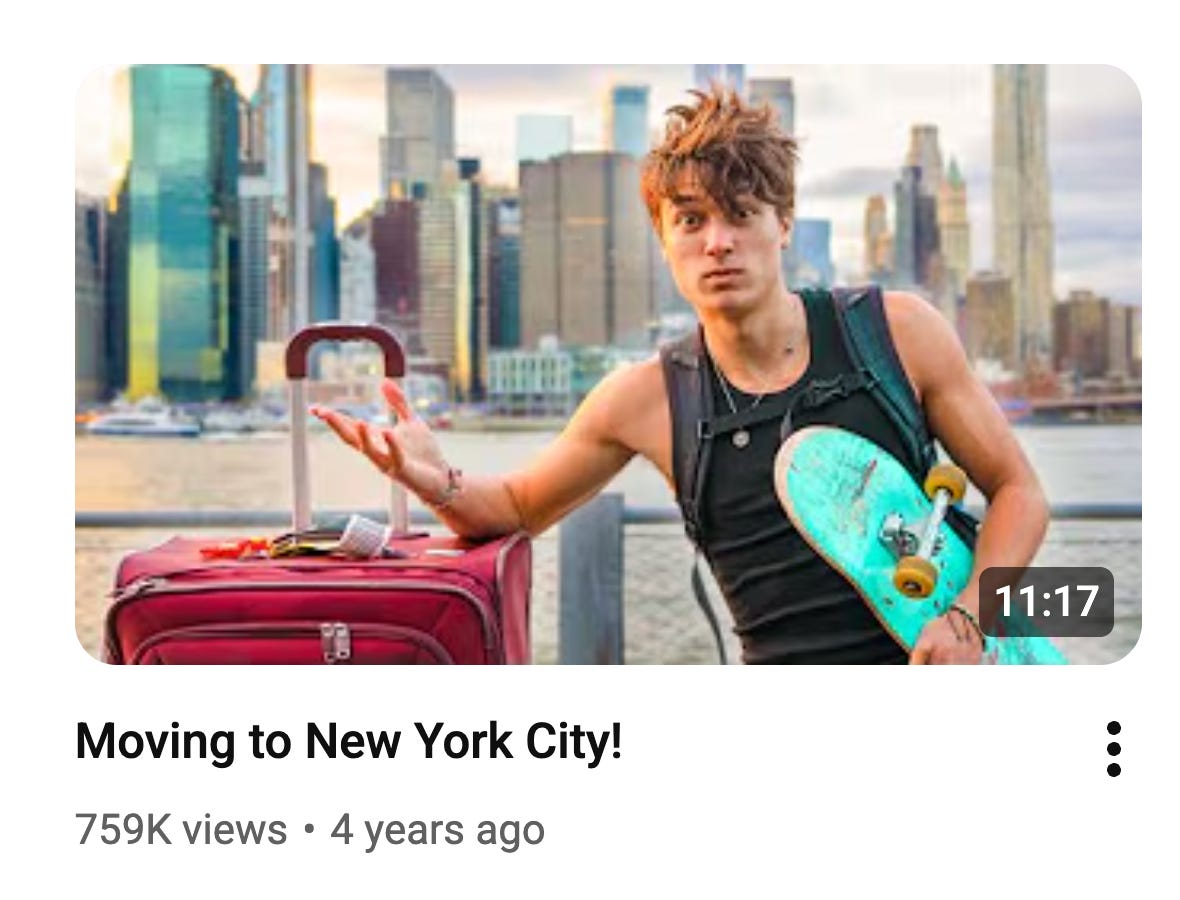
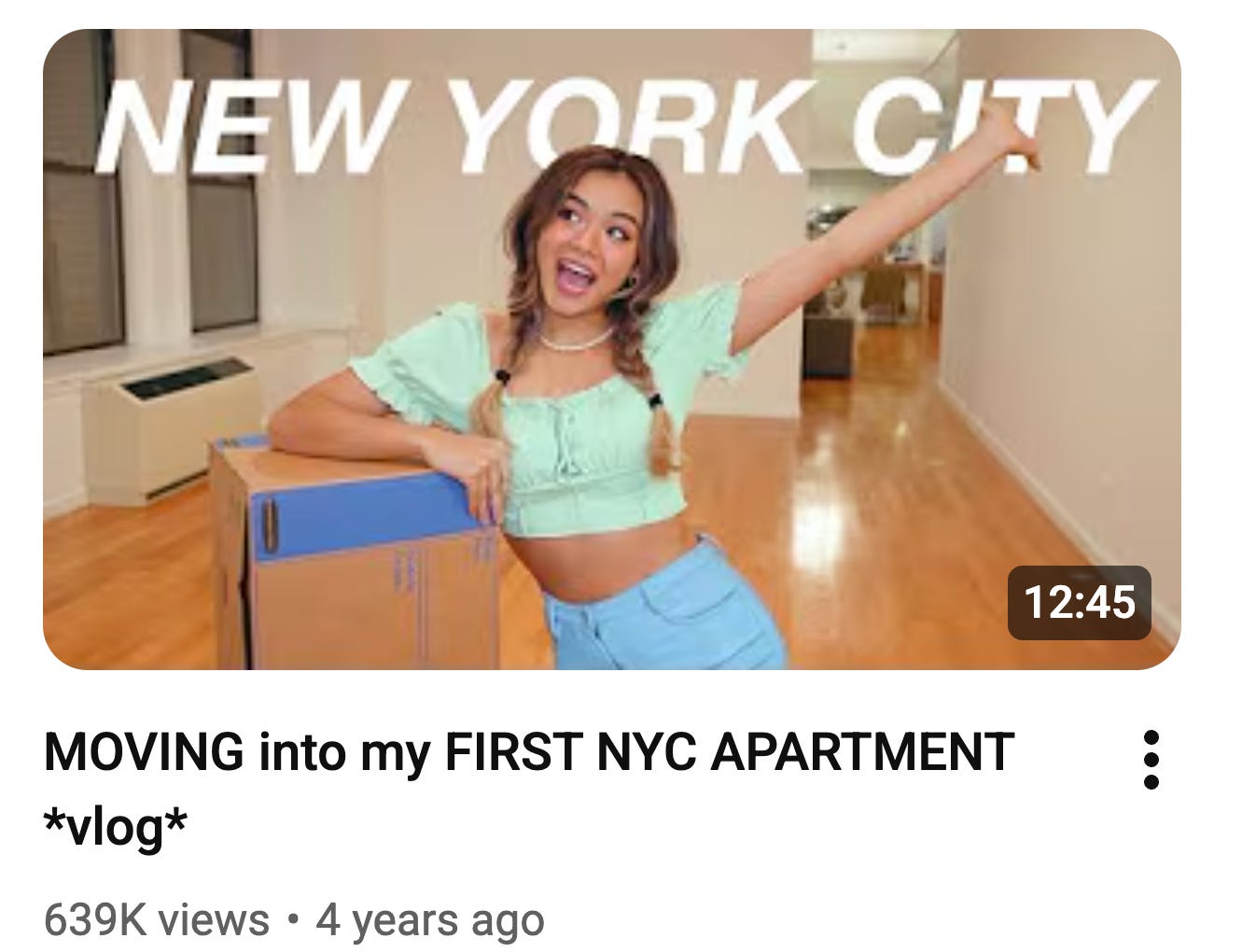
    Elliot Choy was not the only content creator (YouTuber) that moved to the city during 2021, he was one of many. As I continued to watch every new upload on his channel living in NYC, and his newfound NYC lifestyle, his motives for moving to the city became evident when he created ur mom’s house, a content creator house with fellow YouTubers, urmomashley, Kelly Wakasa, and Annemariechase. The first ever content creator house in NYC, as Elliot Choy would boost.

    A content creator house in NYC–similar to that of LA’s content houses, where it seemed to first originate due to YouTubers collaborating with one another, such as the notorious Team10 house with the Paul brothers–filled with so much potential with young creators was a dream for Elliot Choy, who was the mastermind behind assembling this first NYC content house.

    Yet, ur moms house barely lasted a year, November 2021 – October 2022.

    Outside of the public fall out between Elliot Choy and Kelly Wakasa, which seemed to stem from internal conflicts in the house, the hopes of a concrete and stable NYC content house was still up for grabs yet again for another content creator to embark on. As sad I was to hear about this as a subscriber tuning to new uploads weekly during my junior year in college still living at home with my parents, and vicariously living through these content creators close in age to me, experiencing my city through $7 iced lattes, spontaneous lunches & dinners, spending money that I did not have, this is where my research journey began.

    September/October 2020

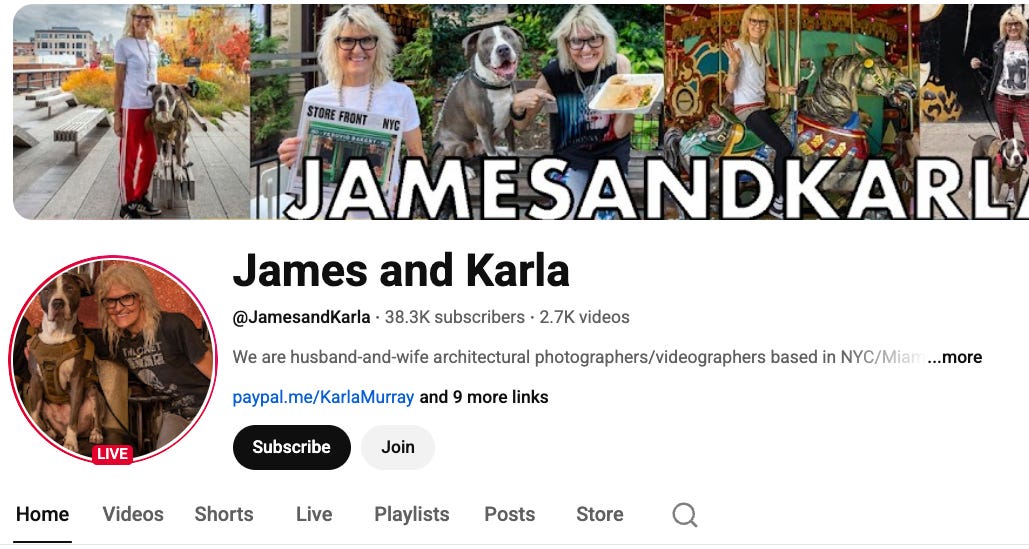
    I found the YouTube channel JamesandKarla, a native New York couple living in NYC with their charming dog, Hudson. I do not entirely remember how I found their channel but I am sure it was recommended to me via YouTube’s algorithm. They are a walking channel where they livestream (and still continue to do so!) walking around various parts of the city, not just Manhattan, with Hudson, speaking on historical facts about the city, but most importantly highlighting store fronts from local mom and pop shops in the city.

    Due to my limited ability to travel around the city due to classes and work, I was also living vicariously through their livestreams, viewing parts of the city I had not visited since the lockdown. But what kept me interested and coming back to their livestreams, outside of cute Hudson eating pizza occasionally, were the moments they would walk into local mom and pop shops and speak to the owners directly, to which a majority of the store owners they knew by name. Karla would check-in with them, while James would hold onto the gimbal. They would talk about their store and the history of the building, and even the life story of the store owner and how they came to create a business. Most of the store owners would have a similar thread in their stories about having to take over family business, looking after the business, and so on. But the conversation would always go back to the pandemic, and how they were struggling. Before saying their goodbyes to the storeowners, Karla would always give the address of the store and hours, encouraging people watching to come and support the store. Soon after every livestream would end, I would have weekend plans to go visit the many local stores featured in the livestream and even eat at some (which I still do till this day).

    As a native New Yorker, James and Karla’s channel struck me, as I began to view my city with fresh new eyes since there were so many local stores I never visited and ever heard about. I had thought I knew my city like the back of my hand. I enjoyed them walking through parts of the city that I walked through, saying hello to neighbors they knew in the East Village. It made me feel connected and encouraged as a New Yorker, especially during a dark time due to the pandemic. Outside of just a walking channel, they are architectural photographers, having their own business as well, and during the harsh winter months they flock to sunny Florida with Hudson.

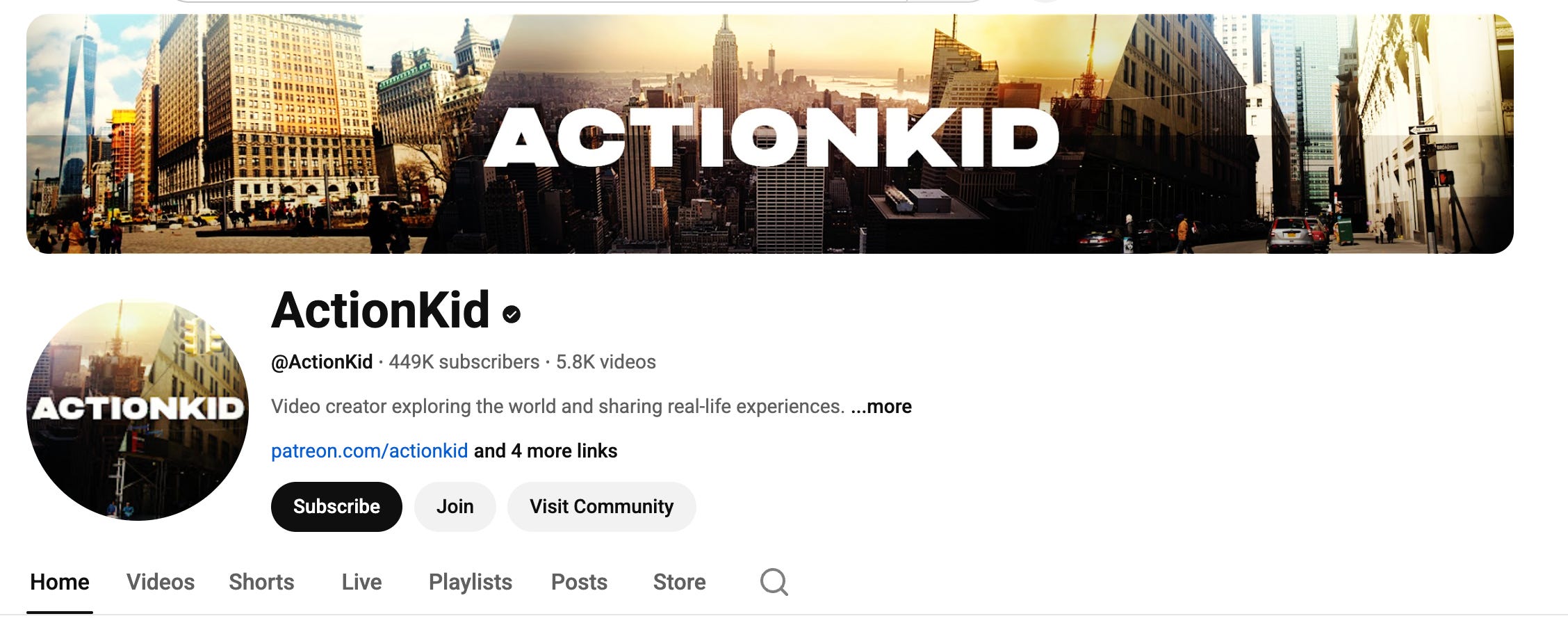
    ActionKid is also another walking channel on YouTube I had began watching during lockdown. Similar to James and Karla, ActionKid would talk about random facts and engage with those in the chat, whilst walking through the city. I had actually learned about James and Karla’s channel through ActionKid as they would at times livestream together visiting local stores. ActionKid is also a native New Yorker from Queens.