how covid impacted content creation
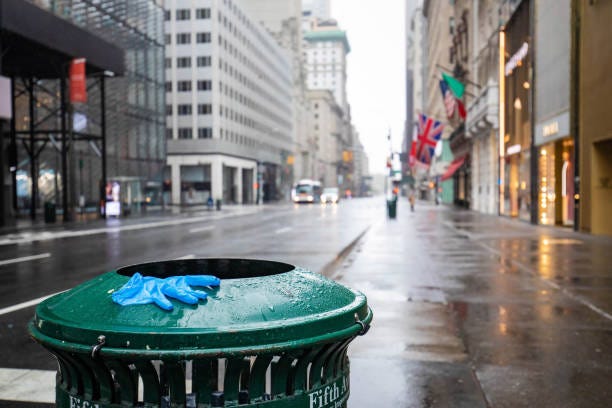
It would be an understatement to say that COVID-19 changed the world. Anyone and anything were impacted by the contagious virus, as entire economies–not just financial ones–and institutions were at the mercy of a global pandemic. Though I want to particularly touch on how lockdown impacted both the consumption and production of content creation. What I mean by this is that our relationship as both viewers and producers of content shifted as a result of being confined to our homes. Seemingly despite having more free and idle time during lockdown, short-form content like TikTok saw an upsurge in popularity. Moreover, as work from home became a new reality for those in the position and privilege to do so, content naturally became more confined to private and domesticity spaces.
It is noteworthy that the shift between short form to long form content and vice versa has always existed on social media platforms prior to 2020. In fact, most popular platforms like Twitter (now Elon Musk’s’ X) and Instagram began with only having short form content before expanding to long form content. In the early days of Twitter, Jack Doherty’s Twitter, posts were no longer than 140 characters, resulting in language and ideas to be circumscribed. This nettlesome but unique feature set apart Twitter from other early social media platforms, forcing users to be creative and brief in their posts. The decision for 140 characters was not based on Doherty’s preference but due to the capacity the platform could handle at the time. It was not until November 2017 when Twitter increased the character limit to 280, an additional 140 characters. There were mixed feelings coming from users, some were happy that they no longer needed to confine themselves to 140 characters or less, whilst others felt that the character limit is what gave Twitter its identity and popularity.
Instagram experienced a similar gradual shift from short form to long form content. In 2010 when Instagram launched, users were only allowed to post one photo per post. One single photo per post sounds unbelievable compared to where Instagram is now, but just like Twitter, the social media platform’s bandwidth was still in its preliminary stages. Eventually in 2013, 15-second videos were introduced onto the platform. Users were no longer bounded to still-images to create storytelling and sharing of ideas, as moving images made posts more engaging and fun. Though just like Twitter in 2017, Instagram inched towards long-form content by announcing their ‘carousel feature’, which allowed users to post up to 10 photos or videos in a single swipeable post.
As content became more elaborate on social media, innately short form content progressed into long form content. Of course, depending on the type of content and genre, the choice for short form or long form content could sway either direction. Think of 2013 when Vine came out, most of the popular and recognizable Vines were comical and blithesome. It made sense that comedy was compatible as a short-form content, as users got creative on how to make 6 seconds worthwhile for a quick laugh. Despite Vine’s short-lived legacy, Vine should be considered as a case of ‘ahead of its time’, as now in 2026, short-form content seems to be what users have an appetite for with TikTok, Instagram reels, and YouTube shorts. Perhaps Vine gave social media users a sneak peek for how effective but still entertaining short-form content can be as it saw a reemergence in 2020.
Notably, 2020 was a traumatic and eerie year in the United States. Statewide lockdowns were in place, COVID cases were rising every day, and the news became all too morbid to bare. For non-essential workers stuck at home, figuring out how to pass the time was a common experience. Still, with all the time in the world, people were consuming far more short-form content during the pandemic as TikTok was named the most downloaded app in 2020.
But why?
Well, there was an already overwhelming sense of traditional media fatigue and agitation that the pandemic unveiled and even exacerbated. Those who distrusted major television networks prior to the pandemic, found even more of a reason to not tune into news networks as misinformation regarding COVID circulated thanks to the unreliable Trump administration at the time. People intrinsically went onto social media to escape what was happening right outside their doors. Thus, short-form content acted as a substitute for our appetite in terms of media. TikToks were fast and effective in communicating and sharing of ideas, creating a sense of dopamine for an entire dormant audience.
Shifting gears over to the production of content during lockdown, it is useful to view this relationship in parallel to how prevalent work from home became. As many jobs had to adopt to work from home (primarily office jobs), so did content creation. Content became more insular as socializing with others and going outside was interfered by lockdown. Naturally with home now being the main site of everyday interaction during quarantine, users on social media were more susceptible to being vulnerable and exposed. The presentation of the self as content heightened as the line between public and private spaces blurred as content entered domesticity. Echoes of this still function as a form of content-making in 2026 as the lack of boundaries between the private and public space was obstructed by COVID.
Sources:
Instagram. “Introducing Video on Instagram.”
Anonymous. “TikTok named as the most downloaded app of 2020.” BBC.
Amelia. “Twitter’s Evolution: From 140 Characters to Now.” Medium.
Constine, Josh. “Instagram lets you post up to 10 photos or videos as 1 swipeable carousel.” TechCrunch.


Leave a Reply