the British are coming!
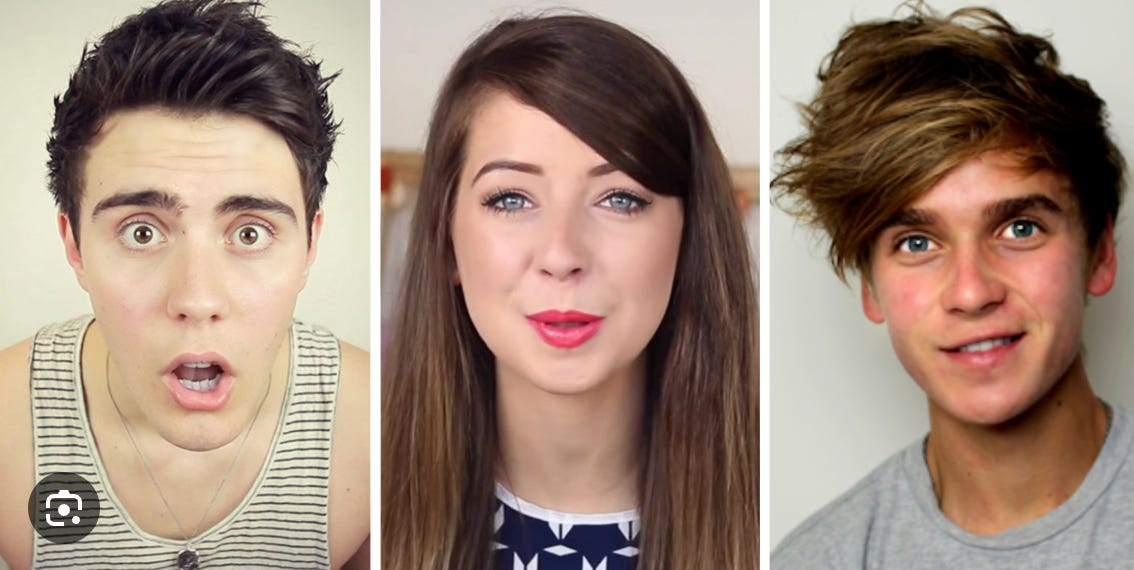
Los Angeles was not the only city where YouTubers started to pop up, as concurrently across the Atlantic Ocean, the UK started to see a small batch of their own YouTubers in the early 2010s. Thus, the arrival of the British YouTubers.
Early British YouTubers were Zoella (Zoe Sugg), Jacksgap (Jack & Finn Harries), sprinkleofglitter (Louise Pentland), danisnotonfire (Daniel Howell), theamazingphil (Phil Lester), Caspar (Caspar Lee, South-African), PointlessBlog (Alfie Deyes), thatcherjoe (Joe Sugg), Marcus Butler, charlieissocoollike (Charlie McDonnell), Jim Chapman & Tanya Burr. My introduction to British YouTubers actually started when I began to listen to One Direction, which was the summer before middle school. Conveniently, that same the summer Olympics were being hosted in London. I would watch YouTube compilation videos of the boys during their X-Factor days, and their video dairies one after another. I was ultimately charmed and enthralled by this new promising boyband. I don’t think I speak alone here that those early compilation videos on YouTube of One Direction throughout bootcamp in X-Factor was my starting point in being a dedicated Directioner, as I and other fan accounts on Twitter (yes, Twitter) would bond over this pivotal point in our Directioner journey.
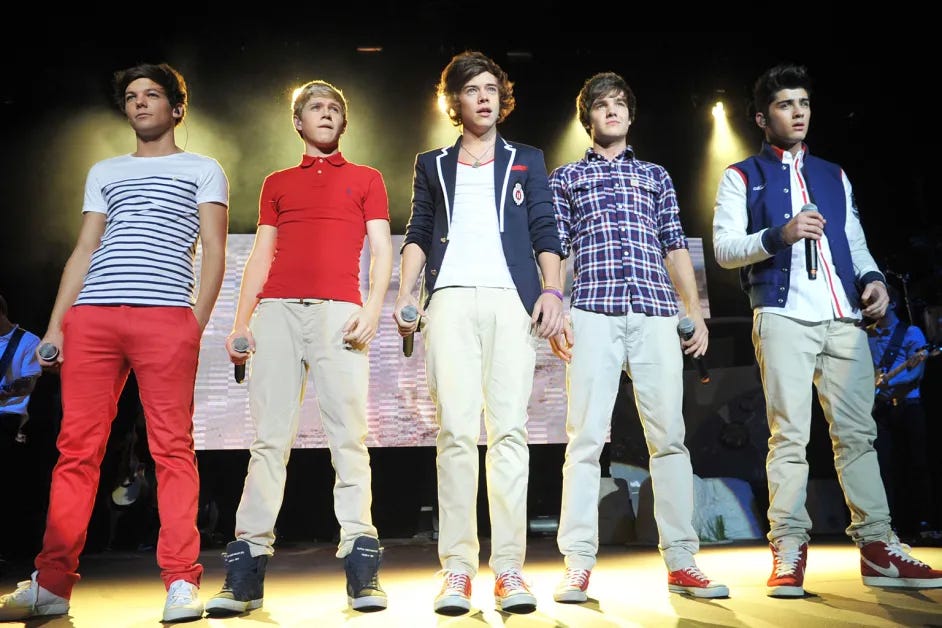
Honestly speaking, watching British YouTubers back in 2012 was a strategy to gather intel about British culture, in an attempt to feel connected to my favorite boyband. To me, it felt like the more information I gathered about the UK and all things related to 1D; I was to be certified in my expertise as a Directioner. At the time, every real Directioner ought to know that Louie liked carrots, Zayn was mysterious, Niall was silly, Liam was afraid of spoons, and Harry was charming. My middle school friends who were also Directioners followed the same strategy too. We’d chat over what new British slang we learned from various YouTube videos during lunch, like fancy and bullocks, and claim Nando’s as our favorite restaurant since Niall liked it so much. Some would often show up to class with their attempt of a messy hair bun, citing Zoella’s YouTube tutorial. I tried doing the messy hair bun on myself since everyone else was doing it, but my hair was too flat and stubborn, so I gave up on it. Since most of these hairstyles were being done by white woman with different hair texture, my friends and I still attempted to replicate it despite being a collective of Dominican, Puerto-Rican, Black, and Mexican girls.
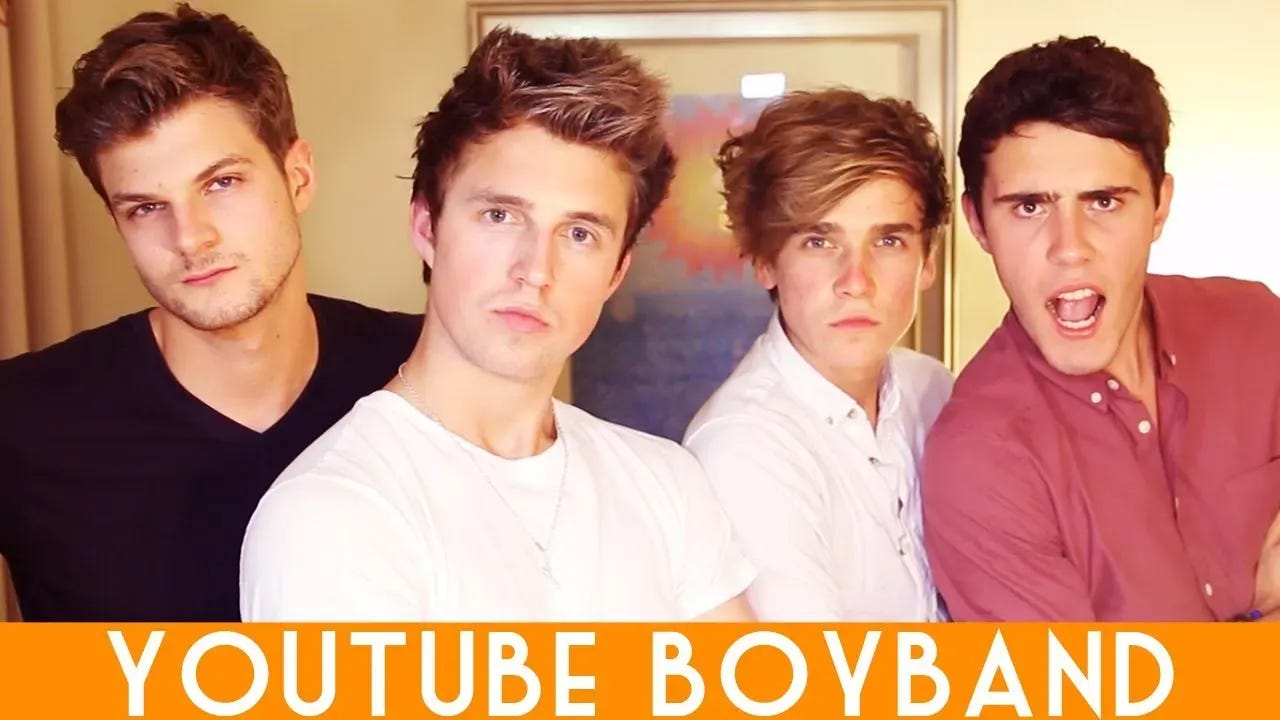
One Direction fever trickled its way down to British YouTubers, as male YouTubers Alfie Deyes, Marcus Butler, Joe Sugg, Caspar Lee, and Jim Chapman uploaded parody videos of themselves as a boyband. They called themselves ‘the YouTube Boy Band’. Of course, they weren’t an actual boyband, but when put together, the five of them could pass off as a boyband with their trendy outfits and dapper hairstyles. These parody videos would amass millions of views on YouTube.
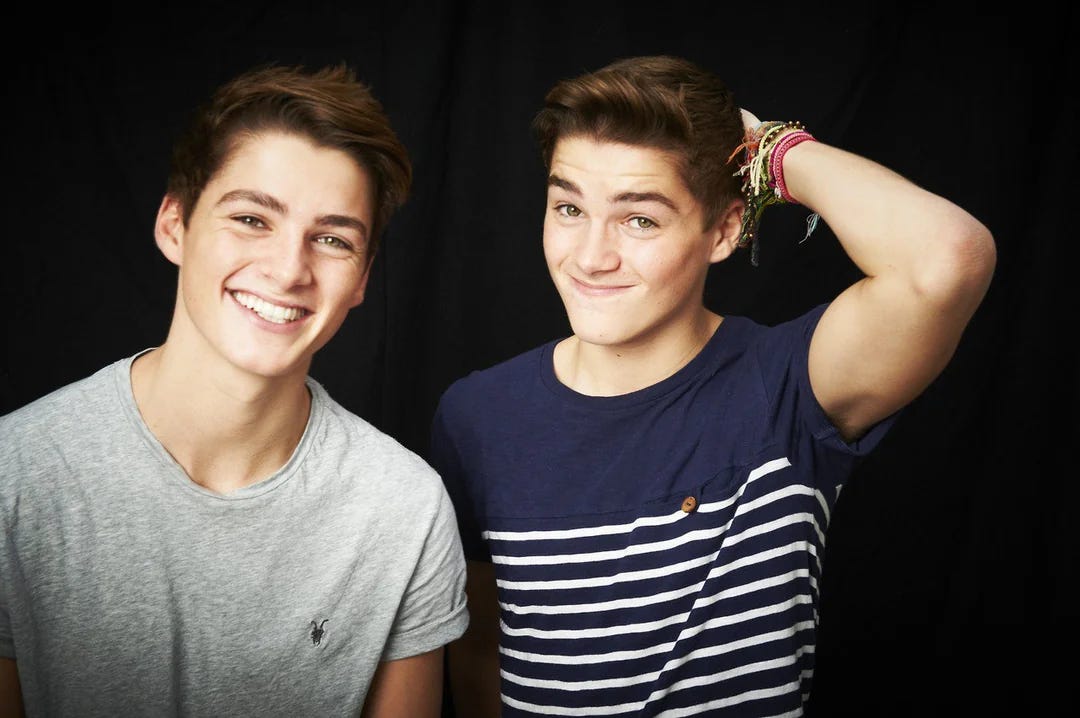
Teens also fangirled over Jacksgap, the twin brother duo, Jack and Finn Harries since they also were conventionally attractive British YouTubers. I didn’t really care that much about the British YouTuber boys, as I never really watched their videos extensively, but rather passively to be in the loop. I remember there being fan pages and wallpaper shared on Tumblr and Twitter dedicated solely to British YouTubers, thus commencing another fandom outside of One Direction.
One thing that stood out to me about British YouTubers was the manner in which British YouTuber presented themselves on camera and how it was discussed online by their subscribers and other viewers. Early British YouTubers were deemed by YouTube viewers as clean-cut and ‘proper’ compared to their American YouTuber counterparts who were blunt and not as filtered.
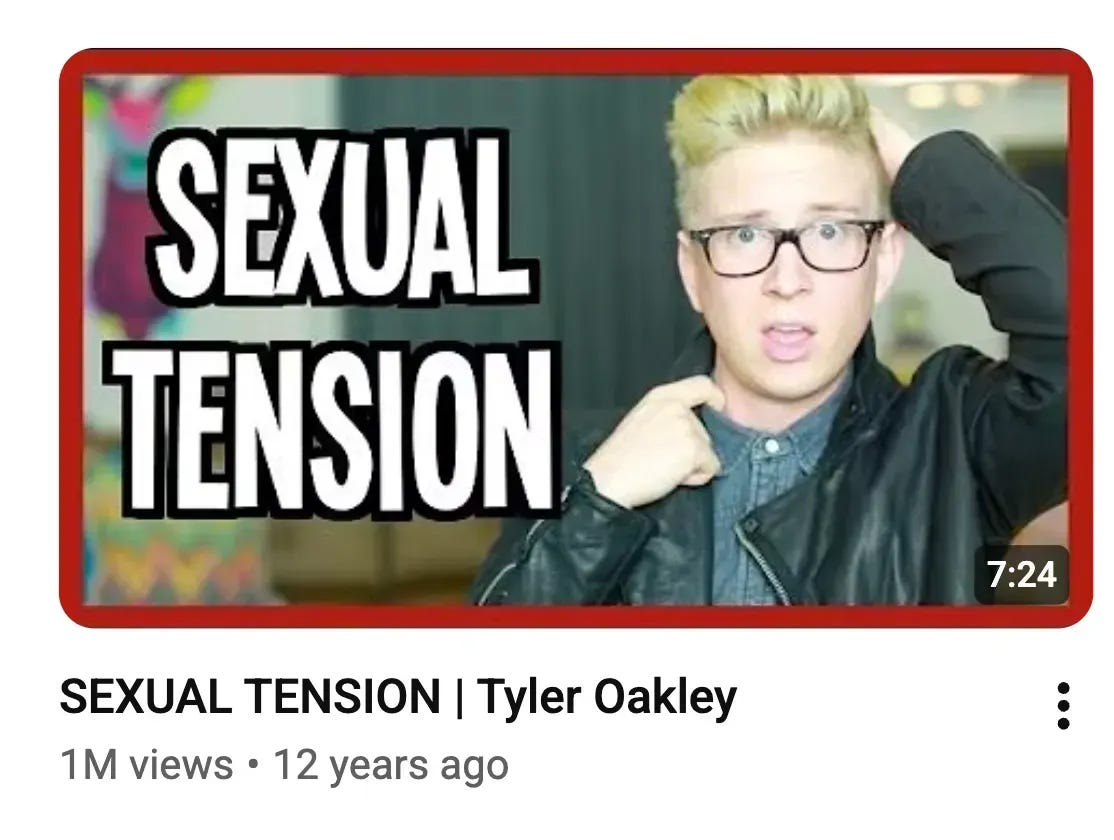
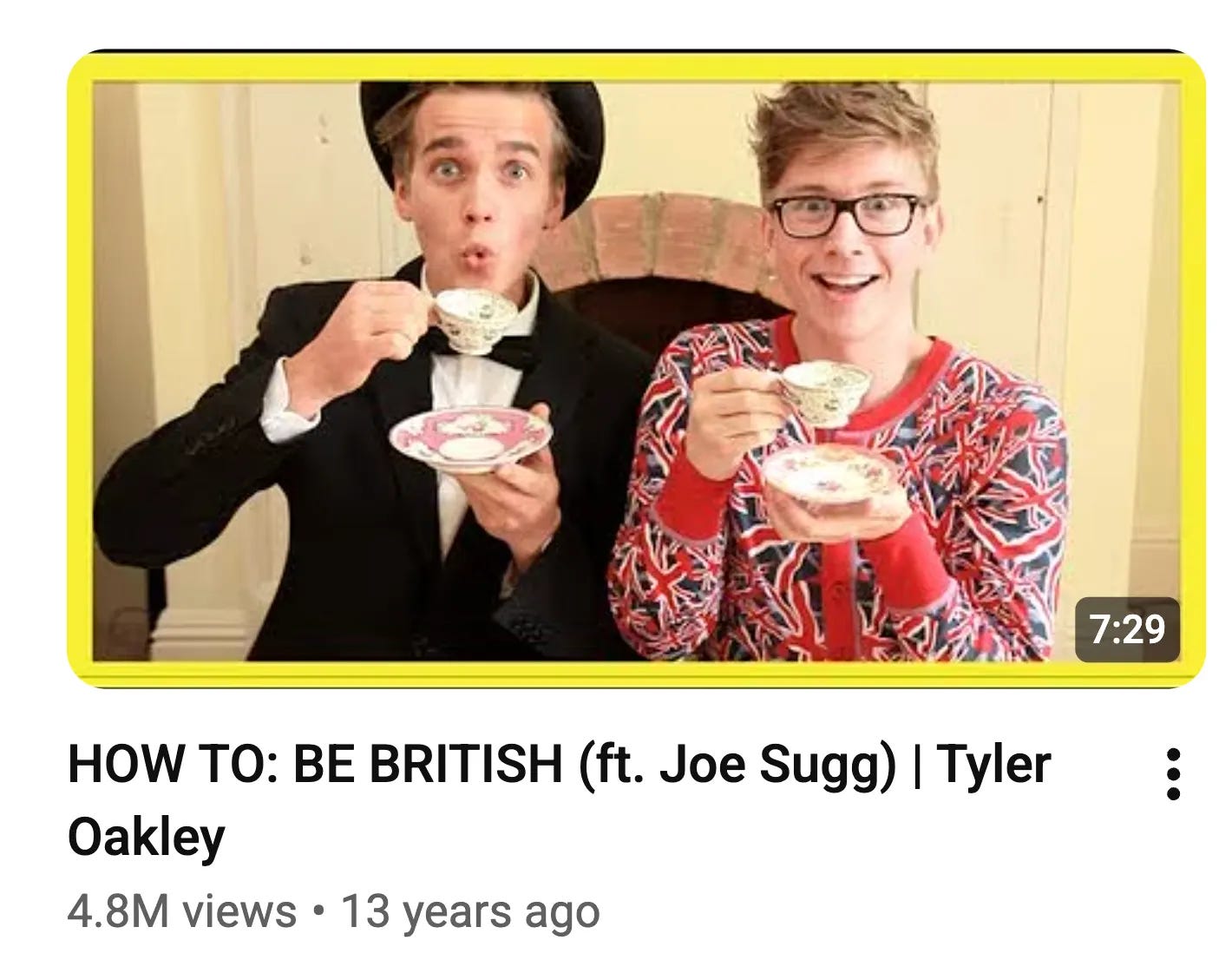
The easiest example that comes to mind is OG YouTuber Tyler Oakley. I believe Tyler Oakley was one of the first American YouTubers to collab with British YouTubers like Louise Pentland and Daniel Howell in his early videos. Tyler Oakley was an openly gay YouTuber known for being unapologetically himself and discussing pop culture. His collabs with British YouTubers were the most memorable videos to me from his channel. His flirtatious mannerisms and giggly personality that usually made people blush in his regular videos, was tenfold when it came to the Brits.
As a media scholar and researcher now, this cultural trope and over characterization that British individuals are proper and traditionalists has always been evident in media like films and televisions, so it tickles my media brain that YouTube, a completely new & different form of media in the early 2010s, experienced a similar visualization and effect with British YouTubers despite being ordinary people, having no real public presence yet, were identified with familiar cultural tropes–often because it’s the easiest default understanding.
Drawing back to my main discussion on the relationship between cities and content creation, I don’t find it surprising that early popular content creators came from two major western cities such as Los Angeles and London. In fact, it makes total sense that the introduction of a new form of media, that being YouTube, and creative class, content creators, (Richard Florida) would be driven forward by western forces such as the UK and the U.S. It’s not the first time that cities have been cited for leading new industries, new ideas, and the migration of new communities. I took a recent trip to the Museum of the City of New York, a museum I’ve never been to despite being a native New Yorker. I came across a quote by Richard C. Longworth, American writer and journalist, that stuck with me:
This much we know for sure: cities are the future…In the 21st century, cities will be where the action is, where ideas and innovations spring up…For better or worse our future is urban.
In the 21st century, where our understanding of the world has compartmentalized itself to the digital, but has also become heavily reliant on it since the introduction of Web 2.0, I think to myself, how can we not talk about the relationship that content creators & creation has on cities? That content creators themselves do not exist in a vacuum, and their online presence has real impact on the cities & communities they decide to engage or disengage with. Cities face a new wave of labor and capital, a digital presence that is enabled and built at its core through capital infrastructure, which is the new creative class–content creators. It is also worth mentioning that shortly after the COVID-19 lockdown, New York City followed after Los Angeles in seeing a rise in content creators migrating to the Big Apple–which I touched on in one of my earlier posts, you can read it here.
On the case of British YouTubers, British YouTubers were increasingly getting popular around the same time American LA YouTubers were, or at least this is the way I viewed it as an American viewer. My research is not so much interested in the question of who came up first in YouTube amongst the Brits and the Americans, but rather the practice of doing YouTube like uploading videos and creating your own channel. Because how I view YouTube in this context is as a phenomenon that individuals were actively engaging in, a new frontier to embark on.
Ultimately, I view the rise of British YouTubers complementary to One Direction’s worldwide popularity during 2011. I’m not saying that One Direction directly made British YouTubers popular or vice versa, but I’m just highlighting this relationship to indicate that these two cultural phenomena occurred simultaneously. The same way I view YouTube’s rise in popularity and creating content after the 2008 financial crash, and the same can be said with COVID-19 and the acceleration of content creators onto the working class. I know, it’s a leap from what I was previously talking about but stay with me.
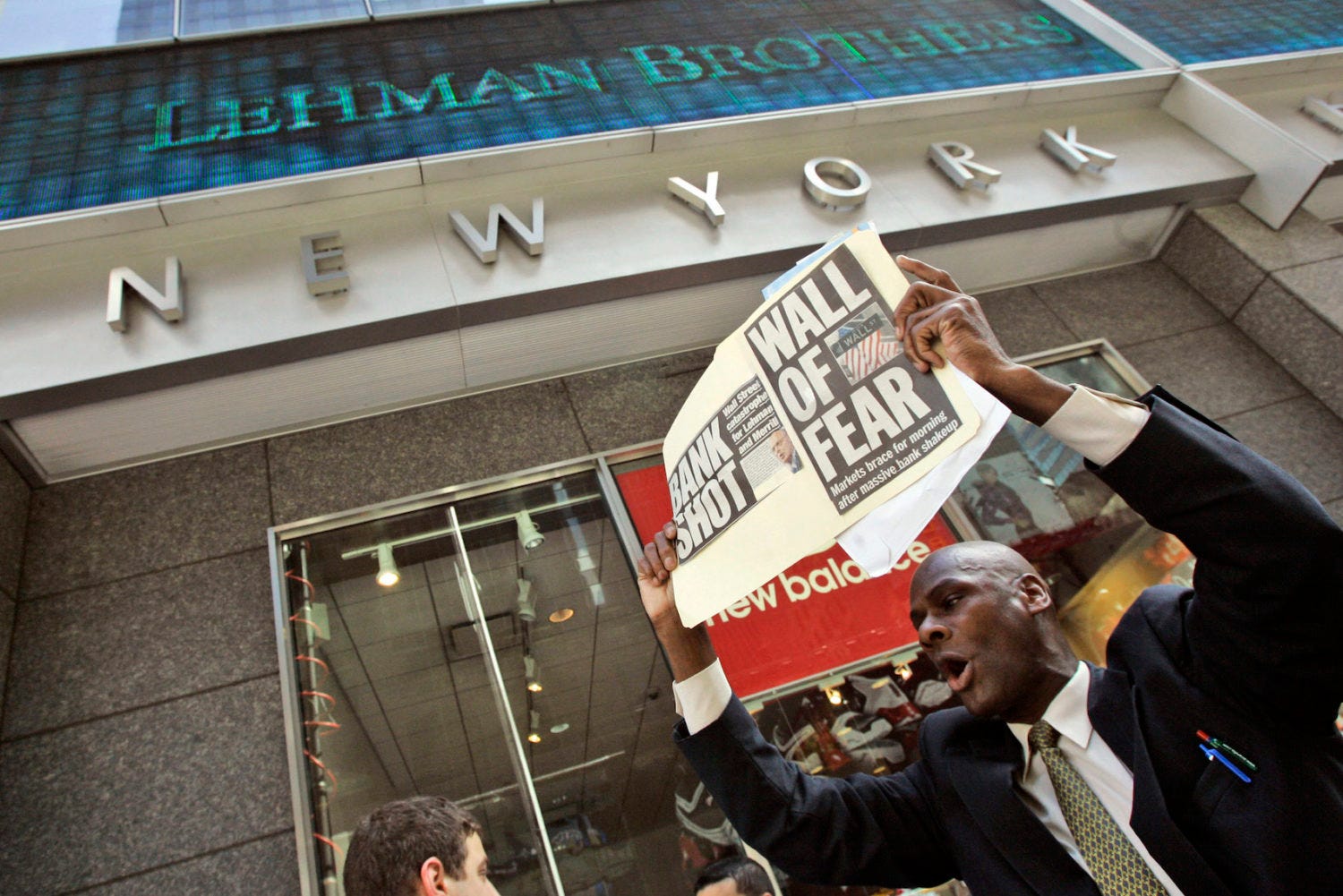
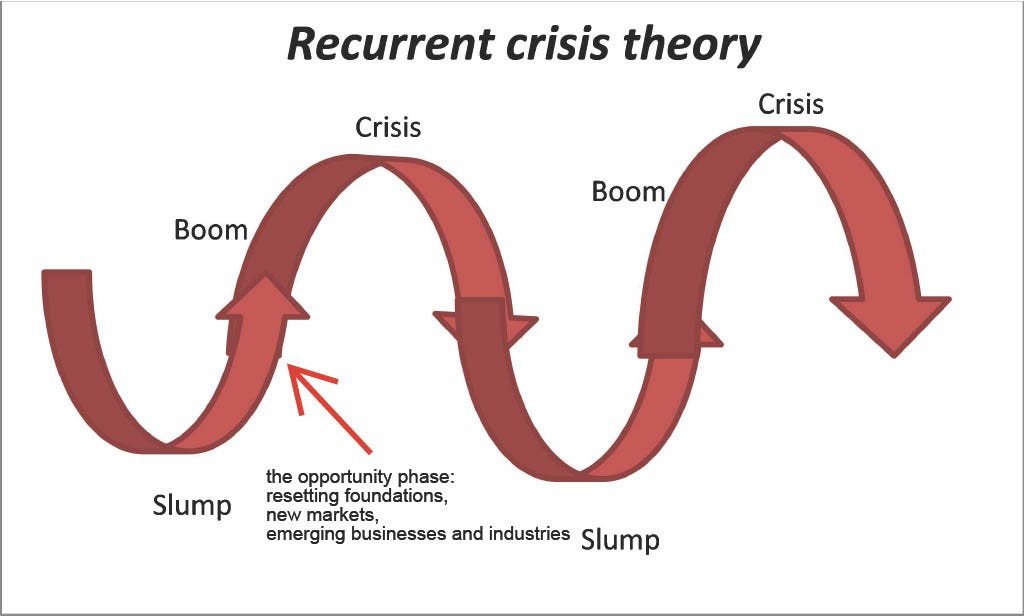
The 2008 financial crash created capital catastrophe, thousands of people lost their jobs, the market crashed, and money was lost. The world seemed to be ending, or so, the capitalistic world was ending. Uncertainty was in the air, and institutions were at their barebones. But amidst all of this, a sliver of space is made that was once not there, a space where new forms of labor, creative expression, what have you, rises from the ashes. And from this space, new forms of ideas and existence take place and cements itself. If future careers, homes, and aspirations were at the mercy of the market crashing, why not try out the unconventional? Why not invest oneself into the possibility of luck. YouTube was that investment for young ambitious adults who did not want to rely on conventional forms of labor and economies. The same can be said when COVID-19 happened, with lockdown and jobs being forced to remote work, ordinary people began to create TikTok accounts, OnlyFans, and invest in the possibility of earning money from their social media accounts. I don’t mean to be dramatic here when I say this but capital drives on catastrophe.


Leave a Reply