Only being a year out since lockdown, I still felt as though I was not able to fully venture and explore my city, so watching NYC related content felt like a “check-in” to see how other parts of the city was handling and navigating the changing environment post-lockdown. Aside from watching James & Karla and ActionKid, I started to watch more YouTube channels from NYC content creators like Cash Jordan and HereBeBarr during 2021.
I learned about Cash Jordan through YouTube’s algorithm as it saw that as I started to consume more NYC content, thus more NYC related channels started to appear on my homepage.
Cash Jordan’s channel from 2020 – 2023 follows him as a real estate agent, showing off apartments in the city, some affordable and some luxurious condos and penthouses located in midtown or downtown Manhattan. Cash was not only uploading videos onto his YouTube channel as he also would upload these apartment tours on TikTok. In some early videos where he’s vlogging out on the street, strangers would often come up to him and say “Hey you’re the TikTok guy, right?”
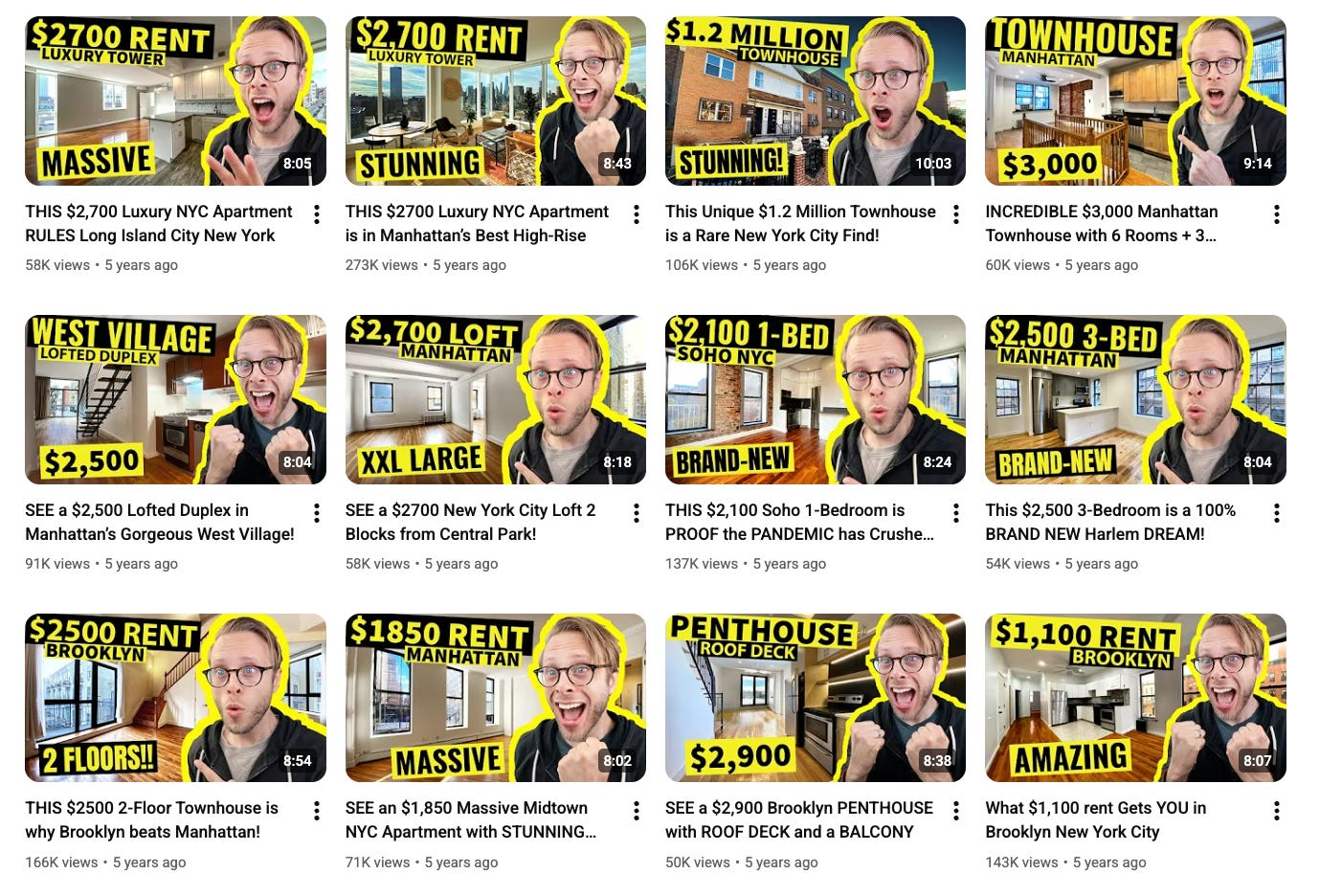
As previously mentioned in my first post, New York City’s real estate market was facing a crisis as many people fled the city during lockdown, since NYC became an early epicenter for the virus. Therefore with many apartments now emptied and vacant, and heavy COVID restrictions implemented, no one was in a rush to move back to the city. Cash Jordan mentioned this time and time again in his videos, as he would walk around the city and talk about the state of the real estate industry, especially since he too was feeling the brunt of this financial loss. Though he would continue to advertise these apartments and hope that when COVID restrictions would lift, people would be enticed to get in contact with him for these rental listings.
The real estate industry was not the only business in NYC facing serve financial loss, as tourism was at a complete halt. In one video of Cash Jordans’ Here Be Barr was featured as they walked around the city and chatted about where the state of the city was in, and speculated the future of New York City. I remember this was a popular conversation even amongst my friends and I, as we wondered if our beloved city would return to normal, and if it would ever be the same as before.
Here Be Barr’s channel was centered on tourism in NYC like the best local spots to go to, which unexplored areas tourists should visit in the city, and so forth. But when COVID-19 took a turn, his channel pivoted to updating his viewers on the state of NYC and whether it was worth coming to visit, or to hold off until more COVID restrictions were lifted from the city.
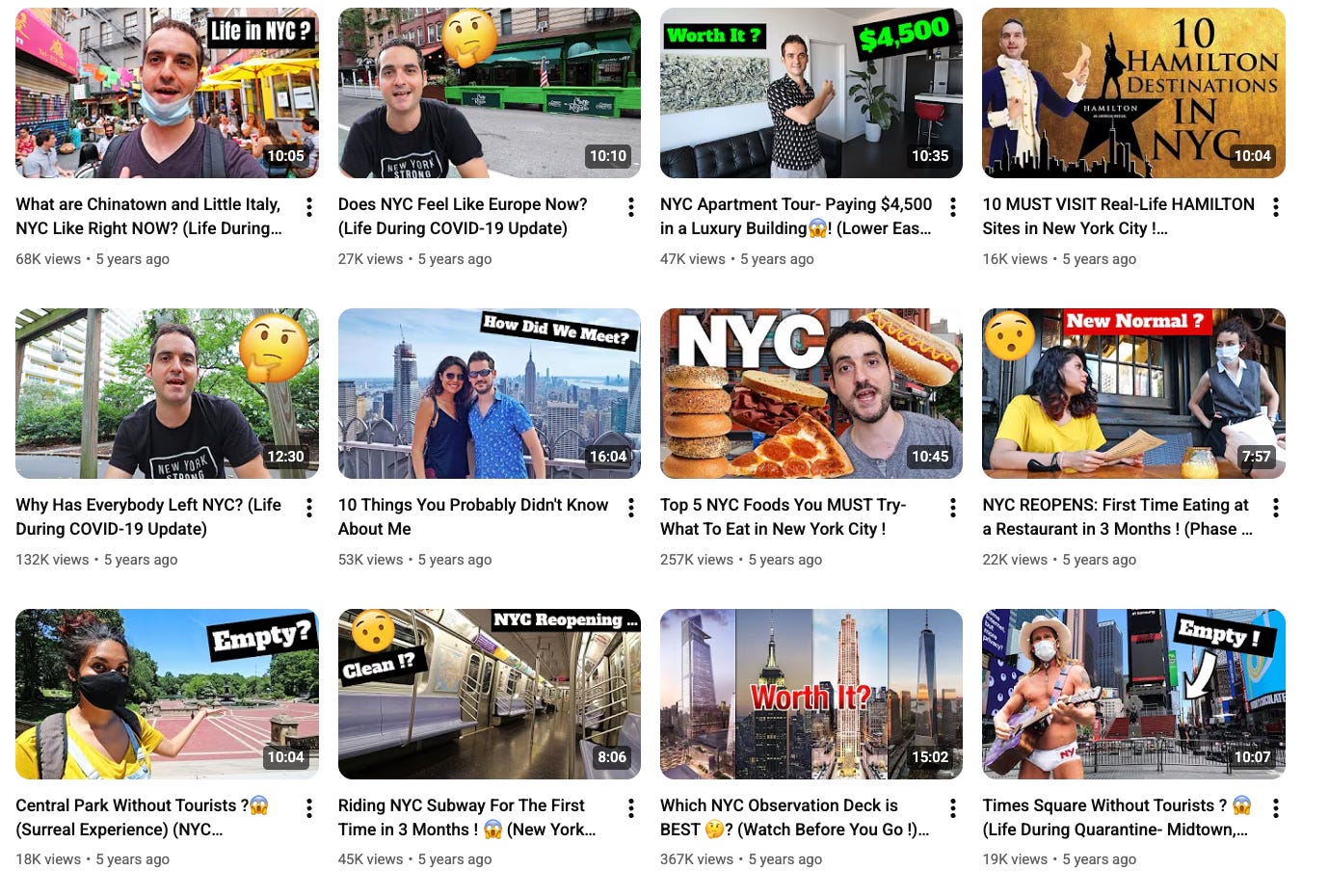
I noticed amongst all these YouTube channels, James & Karla, Action Kid, Cash Jordan and Here Be Barr, all were documenting the changing business landscape of NYC. James & Karla with highlighting mom and pop shows along with Action Kid, Cash Jordan with the real estate industry, and Here Be Barr with the entertainment industry.
All of these content creators stayed in the city during lockdown, as they showed the reality and gravity of the situation of NYC during one of its toughest times. I knew the gravity of the situation in my city was troublesome as I, like so many during this time, became glued to my local news. I would watch the news religiously as more new stories circulated about another business shutting down, a rise in COVID cases, or residents struggling with affording groceries since so many had lost their jobs due to COVID.
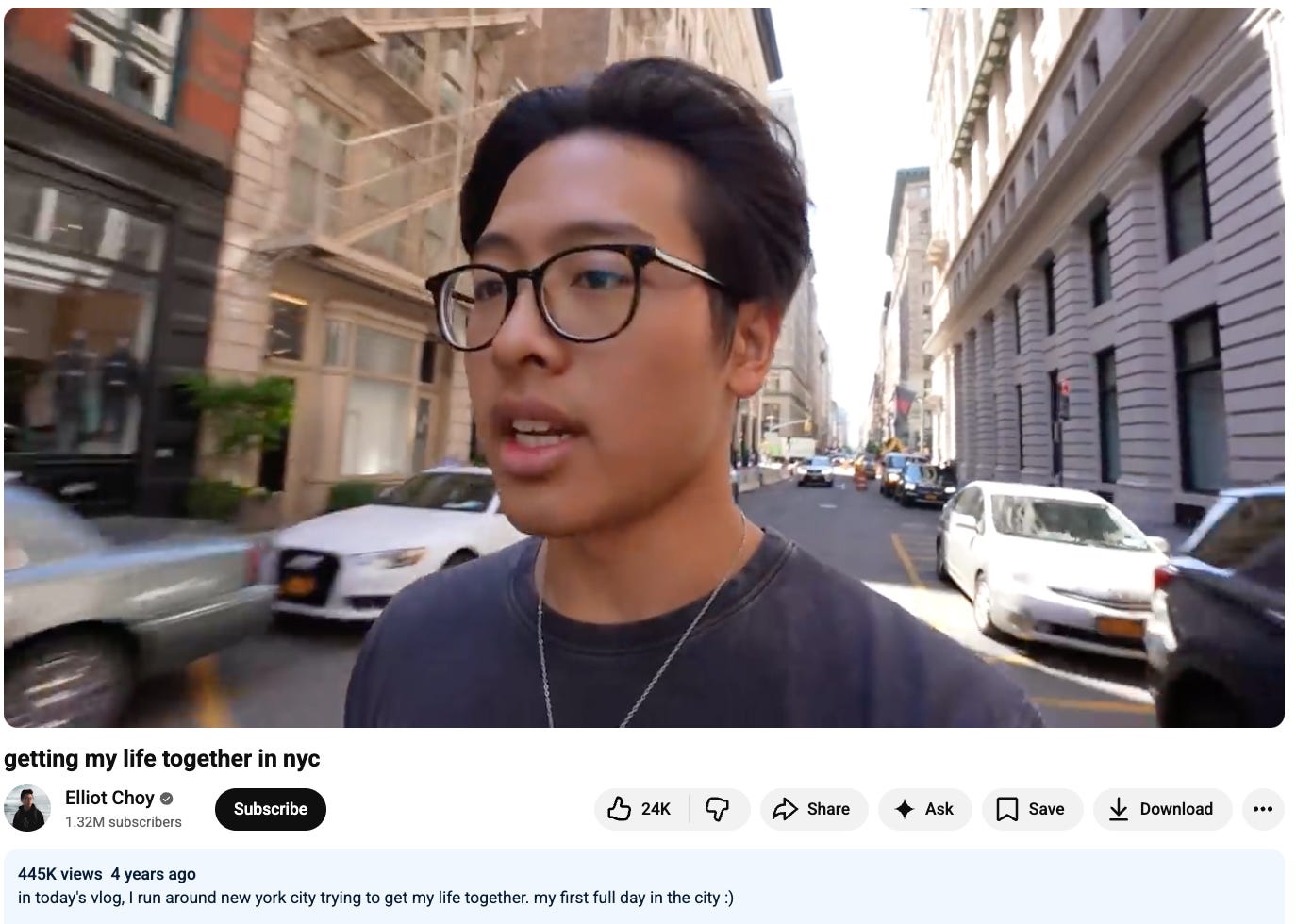
All of it felt exhausting and overwhelming, until it didn’t, when I started to watch these new NYC content creators like Elliot Choy and his content creator house. When I wanted to escape the harsh reality of the state of NYC, I would watch Elliot Choy’s videos as he began his new era living in the Big Apple. I felt inspired by this newly graduate as he was full of ambition in a city where people were beginning to lose hope. In almost of his videos, he would speak on his journey as as young content creator and starting up his business and the routine of self-discipline and journaling. Following Choy throughout NYC felt different, it felt releasing. The upbeat music included in his videos definitely added to this effect.
I remember being so inspired by one of Elliot Choy’s videos that I researched how much was a booster board so that I could travel throughout the city without having to take the subway. Much to my disappointment, booster boards were really expensive and this small itch of mine quickly died down after looking at the price online.
My relationship felt weird to NYC during this time to say the least. I was overjoyed with inspiration and drive from Elliot Choy’s videos, yet on the other hand, I was concerned and worried with the reality of my city’s financial state as James & Karla and other local NYC content creators were documenting the challenges we were still facing as a city. I was expected to graduate in about a year and look for employment. The idea of looking for employment felt taxing and like a crude joke when the graduating class of 2020 was still struggling to find a job nearly 2 years into the pandemic.
This conflicted feeling led to frustration. I felt lied to and disillusioned. I eventually saw two sides of my city on my YouTube homepage, the ‘real’ NYC versus the romanticized version of NYC. This vulnerability really shined through during the pandemic as those who had the money to ‘escape’ a global pandemic and not be too affected by the financial crisis going on felt like the best option. Whilst there were those who could no longer afford rent due to losing a job, etc.
At the time, to me it felt like there were two types of content creators in NYC. Those who were taking advantage of the situation, low rents, financial flexibility and availability to still live normally in the city while creating content versus those who were more humble in their efforts in creating content in the city. This polarization and viewing of content creation in a city stumped me in my research.
By 2023, I tried to make sense of seeing these two sides of NYC by creating two categories: super entrepreneurs versus local entrepreneurs.
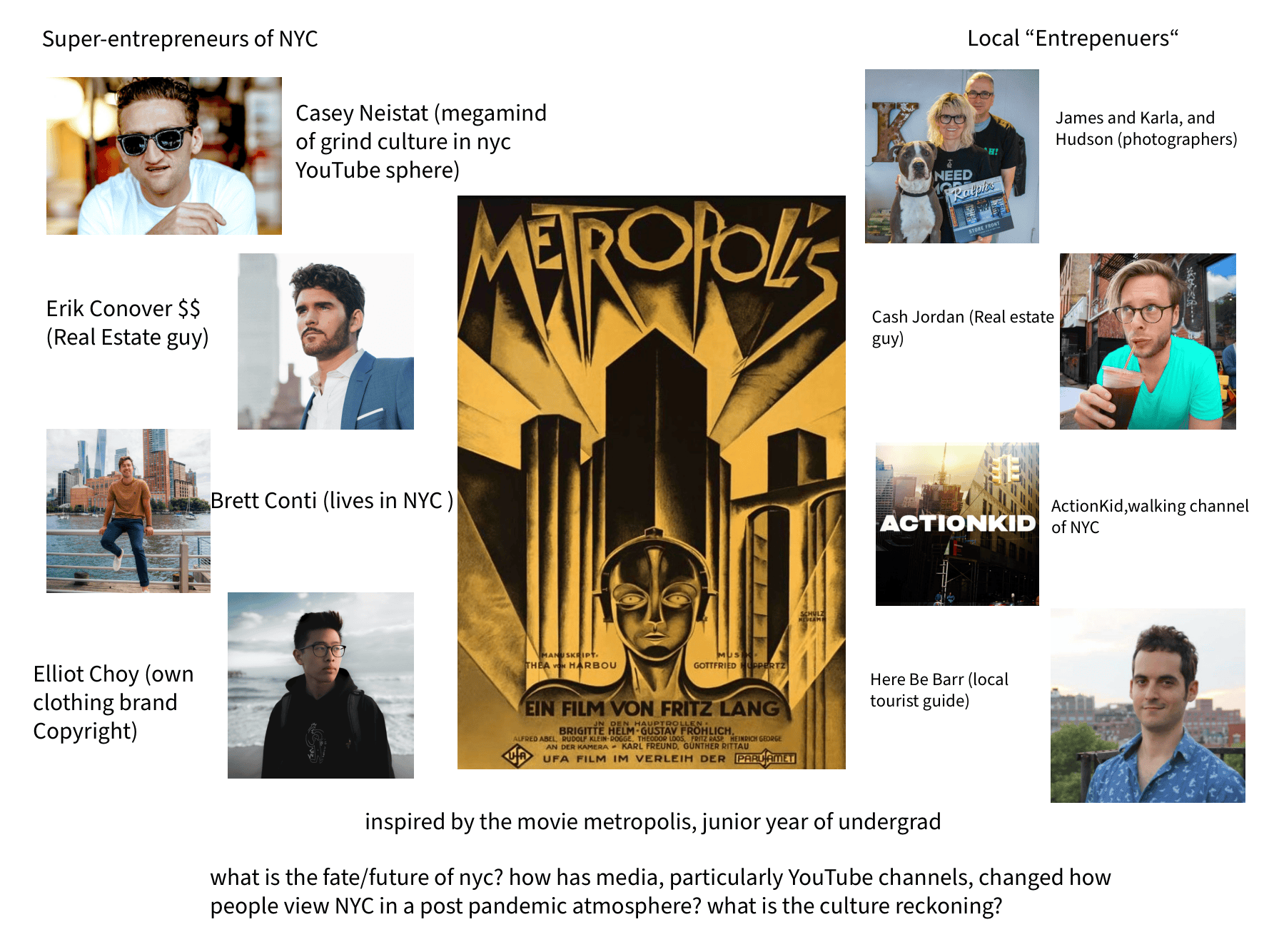
I first presented this idea to my graduate core class, as premature and defensible this chart is, this early terminology was the first step in trying to figure out what I was really trying to get at with this classification between these two types of content creators in NYC.
Even though I reference Charles Dickens here, there are so many more references that come to mind when thinking of New York City and the dichotomy of its two environments: the real NYC experience versus the romanticized experience of NYC.
Here is what I defined the two as:
real NYC = community & investment
romanticized NYC = consuming & divestment
Stopping here for just a second–to view any city in this binary, not just NYC, is fundamentally problematic as it does not allow room for conversation to viewing and experiencing a city another way. It closes up dialogue and is uninviting.
I eventually came to this realization much later from where I first started with this research project, as it came so easy and instinctive for me to view NYC as blatantly classist being the child of a former maid/nanny (primarily in its power structure of work & labor). And despite identifying this flawed binary perspective, I still believe and view NYC as a classist city.
Let me be clear: two things can be true whilst still being at odds with one another.
NYC is a place for born and bred New Yorkers like myself, who live and work in the city, who grind and hustle, who experience the everyday nuances of living in a city like NYC. While on the other hand, NYC is also a place for outsiders to have fun, indulge in luxury, and consume endlessly til their hearts desire. This statement can be problematic for many, as it may come off as if I am complacent with my city being a playground for transplants and die-hard consumerists–I’m not.
Simply put: when you have money, your experience of NYC is different as opposed to when you don’t have money. The way you consume NYC is different.
Admitting this bitter truth about my city is a hard pill to swallow, but it’s the reality for most cities. Including classism as a concept to my research is necessary, or at least I view it so, to better understand a deeper understanding of how content creators have added to our cities as part of the creative class, and how this impacts or disrupts an already existing labor structure in a city.
The photo being referenced in the chart above is from Fritz Lang’s 1927 film, Metropolis.

I first watched this film in my junior year of college in my Robots & Film class. Despite the film being silent, it spoke volumes (pun intended) on every day modern problems that metropolitan cities like NYC see everyday. The poor working class, working everyday to the bone, while the upper wealthier class sits at their throne, watching over a city get constructed and operated by faceless workers. Metropolis hit home for me due to the structure of the city and its labor.

I attached realities of the high and low class to the NYC content creators I was watching, and as much as I trying to attach certain characteristics to one or the either, neither made sense to me. So I ended up dropping this polarizing idea altogether.
I view all NYC content creators as part of an ecosystem that is the creative class (Richard Florida). What I found more interesting from all these content creators was the migration of some like Elliot Choy moving to NYC during a time of financial crisis and cultural crisis as well. It was around 2023 that I began to see more NYC content creation on YouTube and Instagram, and even some conversations on Twitter.
Was NYC becoming the spot to become a content creator in a post-COVID world?
More ‘influencer’ centered stores were tailoring to content creators in the city and the work from home model that came out of COVID made it easier for people to just begin creating content, especially with the “day in my life” in NYC. I saw all of this as a new form of business that sprung out of COVID, or maybe COVID acted as a catalyst for this?
But I knew that we had seen this migration before in content creation. We saw it first with YouTubers and LA.

